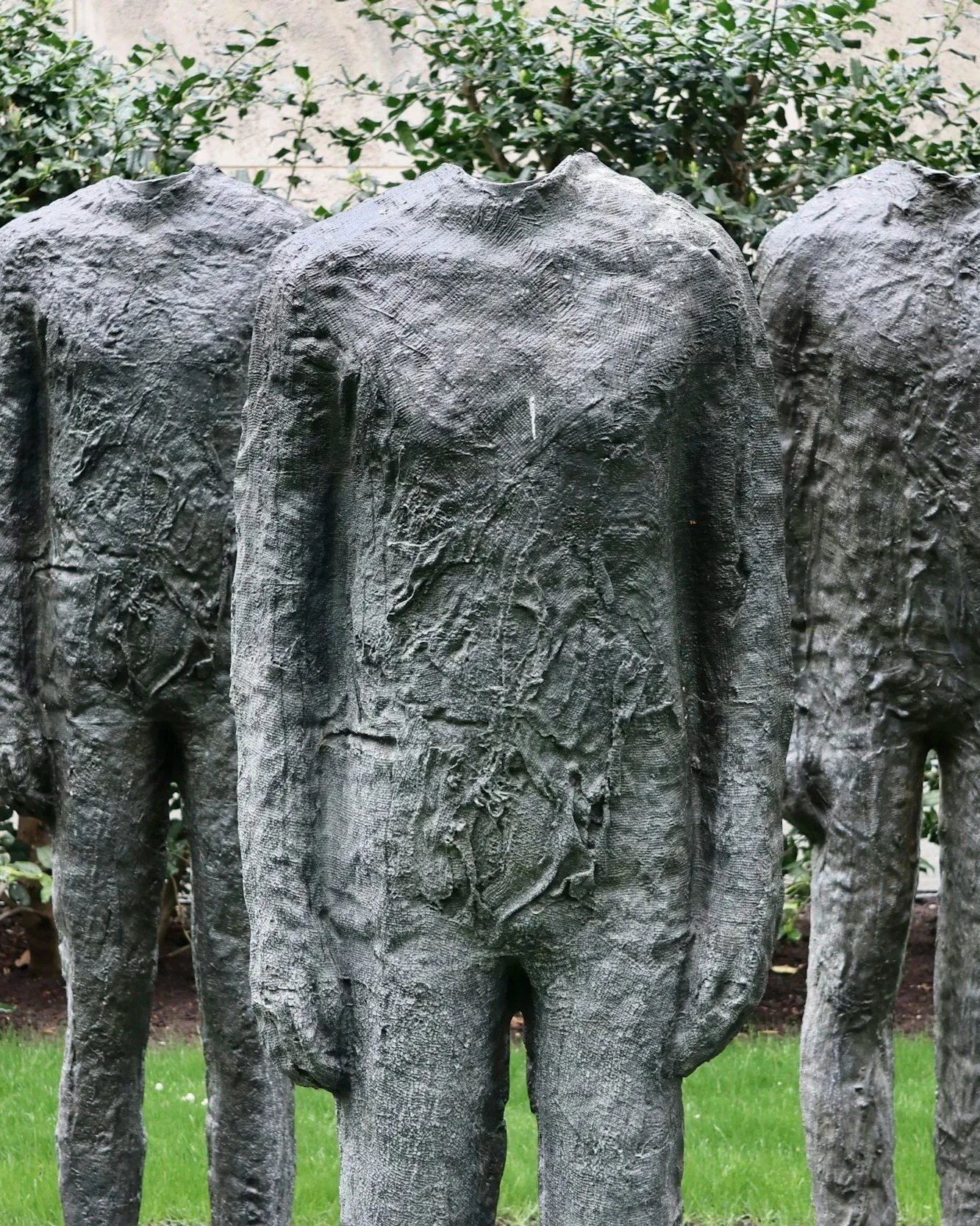
There is No Identity

By the time this post drops, I would have presented at the University of Notre Dame Australia’s Theology at the Beginning of the Third Millenium series of conferences. Regular readers might know that I am often at these conferences, and form one of the highlights of the academic theological calendar in this little corner of the world. This year’s was no different.
In this conference, on the theme of Christology, I indirectly attempted to tackle the subject of racism, which we covered in our first episode of season 3 of our podcast Awkward Asian Theologians. While not talking about racism per se, I touched on the metaphysical and theological puzzle that formed the undercurrent of a lot of the discourse on the subject of race (particularly as it affects the discourse deployed by Catholics who seek to hitch their faith to a racial wagon). More specifically, I dealt in the paper with the assertion of identity, in particular identity deployed as a point of resistance to racial others.
The substance of the paper drew on the 20th century German Thomist Ferdinand Ulrich (I was introduced to Ulrich thanks to many chats with Dr. Tom Gourlay of the Dawson Society in Western Australia, and Fr. Harrison Ayre from the now completed podcast Clerically Speaking, with whom I had the pleasure of being a guest on an episode).
Much of the attention to Ulrich is due to the recent translation of his Homo Abyssus: The Drama of the Question of Being into English by D.C. Schindler (the journal Communio dedicated an entire volume to this work). More specifically, a lot of the attention has been focused on his mantra which, on its face, might trigger many Catholics. This is his assertion that “Being is Nothing”.
To elaborate, the heart of Ulrich’s assertion is the metaphysical claim that created (and it must be emphasised that it is created) being is not a thing as such. This rests on the Thomist distinction between being as such on the one hand, and subsistence in the existence of particular things on the other.
Furthermore, Ulrich is keen to point out that created being is not a thing, a demiurge that in itself becomes responsible for the creation of subsistent things (since that would violate the notion of God as a unity). Instead, created being participates in divine being. Since God is no thing - what we have in created being is pure being, absent subsistence.
Now, at first glance, this seems to be an indulgence in pure abstractions which take us far away from the matter at hand, namely the topic of identity. What hooks this metaphysical framework to the topic of identity is in the assertion of identity over and against another. In such a scenario, I made the claim in the paper that what occurs in such an assertion is an insistence of subsistence.
Why this is a problem is that, as Rachel Coleman noted in her articles on Ulrich, subsistent things get their identity from their participation in created being, but created being, as we noted earlier, is not a thing and is therefore, nothing. More to the point, it is precisely the nothingness of created being that gives rise to the creation of all that subsists. In other words, the pattern of created being giving life to those that exist come precisely in the counterintuitive self-emptying of being into subsistence.
Therefore, subsistent things are only true to themselves when they, participating as they do in created being, similarly empty themselves for the sake of another, rather than assert themselves over and against them. To the extent that they assert subsistence - and here we can include identity - as a wall that repels rather than a well that empties, is the extent to which they negate subsistence.
Ultimately, the paper asserts that Ulrich gives the metaphysical vocabulary to the Augustinian idea that the extent to which we assert our creations, including our identities, is the extent to which we parade mere images, signifying nothing.
Support Awkward Asian Theologian on Patreon, and help make a change to the theological web.