Redeeming Flesh at 10
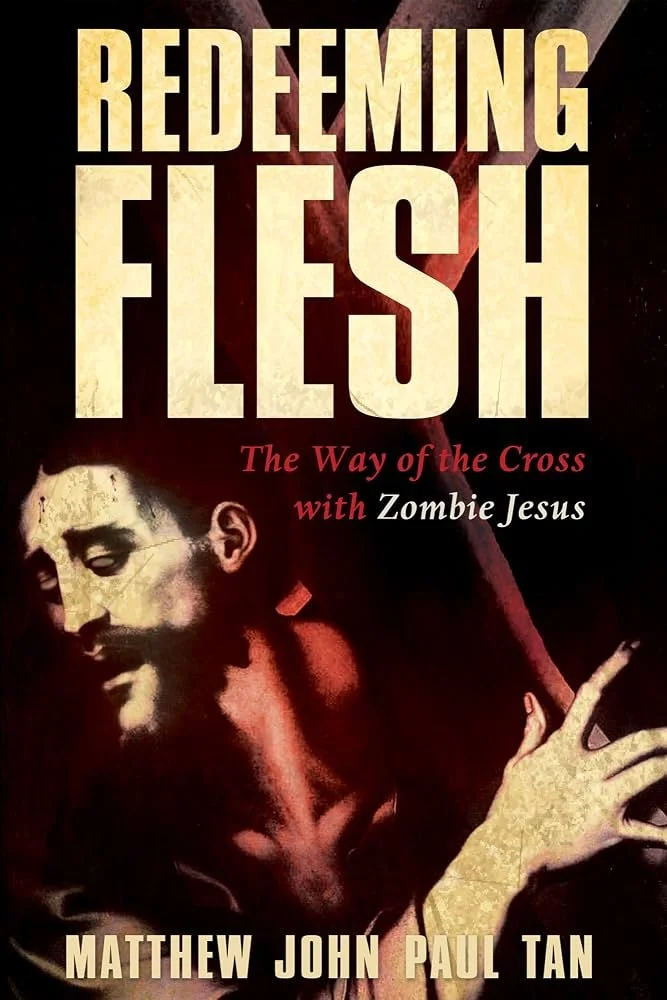
An academic friend of mine, Christian Theological Seminary’s Assoc Prof. Robert Saler, told me that he had prescribed as course reading my book Redeeming Flesh: The Way of the Cross with Zombie Jesus , which was published by Cascade in 2016. Saler had also then kindly provided an endorsement blurb for the back cover of that book.
It is hard to imagine that what began its life as a Holy Week retreat for the seminarians of the Archdiocese of Brisbane is now a decade old part of my publishing profile.
Regular readers might be sick of me mentioning the book for the umpteenth time, but for those unfamiliar, Redeeming Flesh is part devotional, part theopolitical analysis of postmodern culture refracted through the (then) popular motif of the zombie.
Saler’s blurb for the book read:
Whereas people used to scare themselves with ghost stories about disembodied spirits, now Western culture fascinates itself with tales of soulless bodies. Tan's book masterfully blends analysis of how zombie fandom discloses uncomfortable truths about the roles of both body and soul in consumer culture with a daring theological agenda, in which the potential for Christian witness to reclaim its scandalously embodied nature shines forth. This book is theology of culture written at the very highest level.
Silas Morgan’s blurb went:
Matthew Tan makes zombies come alive in Redeeming Flesh. He shows that, when given their cultural and literary due, zombies show us how to live, that is, to live after death. After reading this text, which blends together textual analysis, psychoanalytic wit, and theological insight, one cannot look to either christological devotion, liturgy, or zombie phenomena without seeing them in each other. Living as the undead never sounded like such good news.
The diagnostic book took an old Augustinian trope and looked at how the zombie represented postmodern culture’s then-latest preyed upon and twisted a desire for immortality, which was encapsulated in the book as the psychoanalytical “death drive”. The theological part of the book’s thesis was that only Jesus Christ, represented as Zombie Jesus, could decode and redeem and show the true trajectory of that desire for immortality that the zombie sympathised with but ended up distorting.
While I am proud of having published A Theological Engagement with Pornography earlier this year, I look back on Redeeming Flesh with a certain fondness, as it was probably my most experimental theological works, seeing that it not only looked at the zombie as a theological point of analysis, but also drew upon at once the cultural hermeneutics of Graham Ward, the Eucharistic theology of Alexander Schmemann and the psychoanalytical work of Slavoj Žižek. If I had it all over again, I probably would have also thrown in Byung-Chul Han’s theme of “pure positivity” into the mix (though that finds its way into the book on pornography).
I might be biased, but I think that it is also one of the few theological points I have made that still holds up even if the pop cultural motif that spawned it may have waned in relevance.
If you are interested in learning a touch more about the book, I have provided a summary version of the argument in Church Life Journal, and my friends Dr. Peter Holmes and Prof. Renee Kohler-Ryan interviewed me on This Catholic Life about it.
See Matthew’s writings and other works on LinkTree.