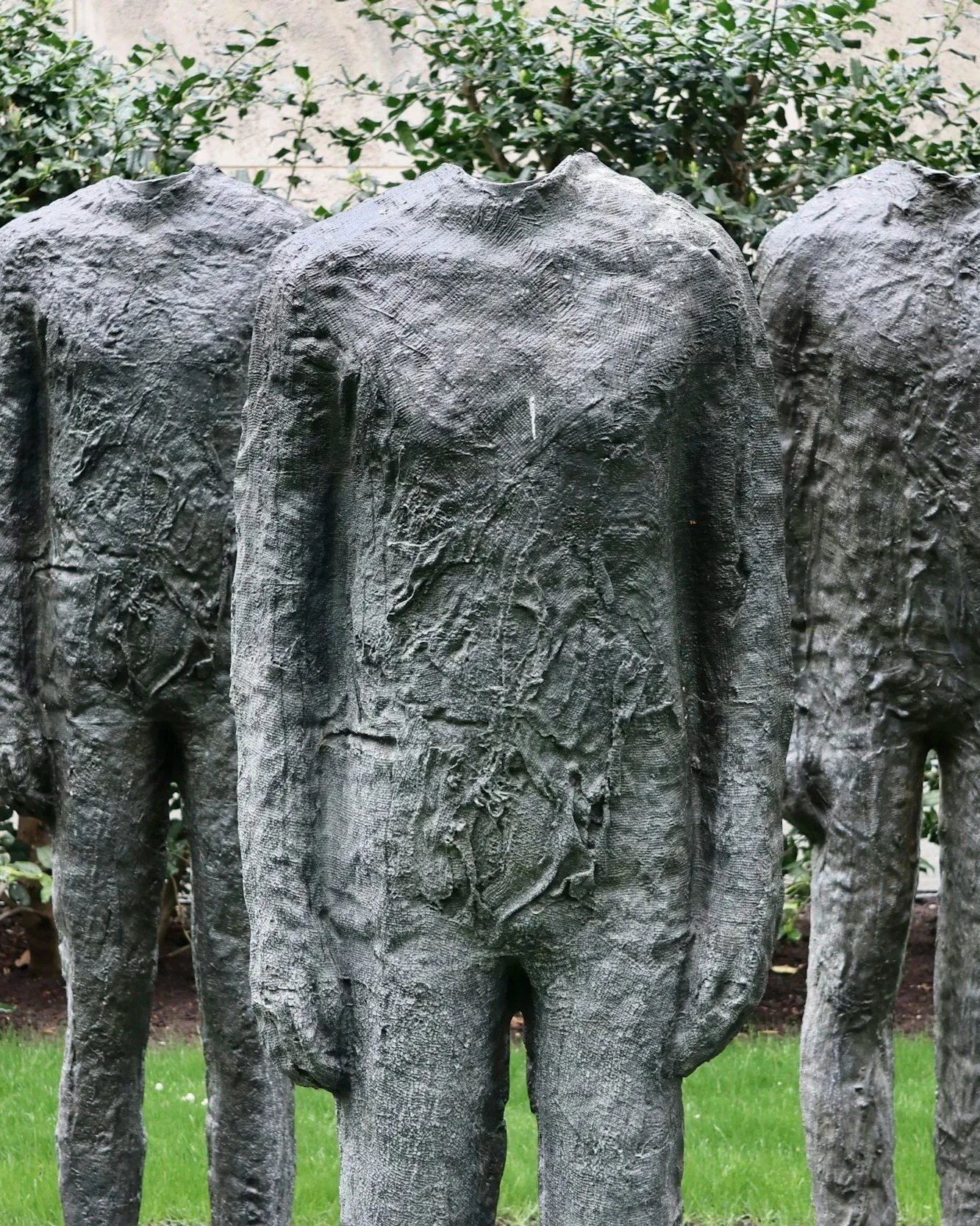
The Weight of Absence

At New Year’s Eve, we may have been guilty of singing Auld Lang Syne, and exhorting those with us to forget old acquaintances and never bring them to mind. This is probably a desirable outcome in relation to some people, but there might be others that would have gone from our lives we would rather not forget.
We may go into the new year with these people from our minds, and there might even be times when, because they are on our minds, we may cross the threshold of another year with a certain sense of heaviness.
How do we make sense of this polarity between absence of their person and the substance of our heaviness?
One way to think this through metaphysically was through Byung-Chul Han’s notion of the “negativity of otherness”, which I explored further in my latest book A Theological Engagement with Pornography, published late last year. While we might be tempted to think of another person as having positive substance, Han regards an authentic - particularly an authentically erotic - apprehension of the other being defined by “negativity” because someone who is truly someone else will escape all my own attempts to assert control over them for my own purposes. Thus, when that person is no longer in our lives, we could be said to be experiencing the heaviness brought precisely by that “negativity of otherness”.
This metaphysical point was expressed most poetically when I read another of Joy Marie Clarkson’s books, You Are A Tree (I have written a post about an earlier book, Aggressively Happy). In a chapter on sadness, Clarkson spoke about the heaviness of burdens. In this context, Clarkson observed that one of the things she observed about the heaviness of the burdens we carry is that:
…they are not only invisible, but they are often the burden of absent things. They are the burdens of people we have lost, affection we never received, desires unfulfilled that we have never given up on. We do not carry the person anymore but the absence of a person. And we do not carry the desired object, but the hollowness of the desire unfulfilled (151).
Clarkson takes it one step further, describing the absences as “whole worlds” encompassing:
The life we thought we would share with someone, decades of experience with a parent we didn’t expect to lose, a fuller happier life with a spouse or partner or a vocation that we can imagine but not obtain. To carry the weight of all that could be or could have been is very heavy (151).
Support Awkward Asian Theologian on Patreon, and help make a change to the theological web.